The True Cost of Borrowing: Mastering the Personal Loan Calculator
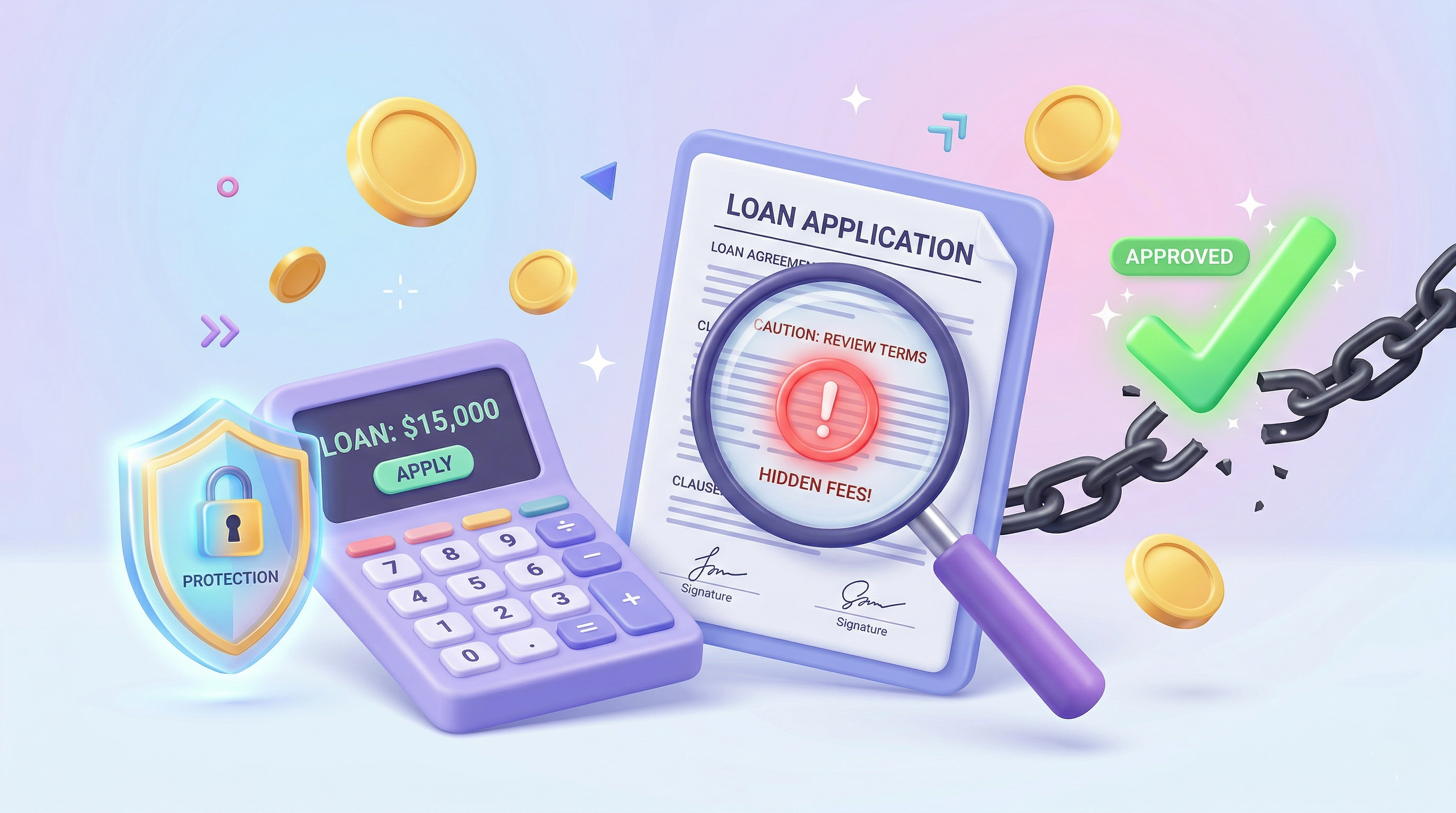
We live in an era of frictionless borrowing. With a few taps on a smartphone, you can secure thousands of dollars to fund a home renovation, consolidate credit card debt, or cover an unexpected medical bill. But this convenience masks a dangerous reality: lenders are master marketers who design their offers to obscure the actual price of their money. Before you sign any digital agreement, you must strip away the marketing fluff and look at the raw mathematics. By plugging the lender's terms into a robust personal loan calculator, you can instantly bypass their sales tactics, revealing the total, unvarnished cost of the debt and empowering yourself to make a truly informed financial decision.
The "Monthly Payment" Illusion
When you apply for a loan, the first thing a lender will highlight is the monthly payment. They will frame the pitch around your budget: "Can you afford $250 a month?" This is the oldest trick in the financial playbook.
By hyper-focusing your attention on the monthly cash flow, they distract you from the total interest you are going to pay over the life of the loan. A $20,000 loan can easily be manipulated to fit into a $300 monthly budget if the lender stretches the repayment term to seven or eight years. However, while your monthly budget feels comfortable, you might end up paying $10,000 in pure interest. Never negotiate based on the monthly payment alone; always evaluate the total cost of borrowing.
The Math Behind the Money: Interest Rates vs. Loan Terms
Understanding how a loan actually amortizes (pays down over time) is critical to protecting your wealth. There is a constant tug-of-war between the interest rate (APR) and the duration of the loan.
Imagine you need to borrow $15,000.
Option A is a 3-year loan at an 8% interest rate.
Option B is a 5-year loan at a seemingly identical 8% interest rate.
Option B will have a significantly lower and more attractive monthly payment. But because you are holding the bank's money for an extra two years, the total interest generated by Option B will be massively higher. A digital projection tool acts as your personal financial x-ray, allowing you to instantly compare these two scenarios side-by-side and visualize exactly how much that "lower monthly payment" is truly costing you in the long run.
Borrowing as a Strategic Tool, Not a Crutch
Debt itself is not inherently evil; it is simply a financial tool that can either build your net worth or destroy it. The wealthy use personal loans strategically, while the middle class often uses them for consumption.
A strategic use of a personal loan is "Debt Consolidation." If you have $10,000 in credit card debt bleeding you dry at a 22% interest rate, taking out a personal loan at 10% to immediately wipe out the credit cards is a brilliant, mathematical victory. It stops the bleeding and gives you a fixed end date for your debt. Conversely, taking out a high-interest loan to fund a luxury vacation is a direct attack on your future net worth. Always ensure the utility or financial return of the borrowed money outlasts the lifespan of the loan itself.
Lenders have armies of actuaries and algorithms working to maximize their profits. You need a tool to level the playing field. Stop relying on the optimistic numbers presented in loan brochures and start doing your own math. Uncover the hidden costs, compare different lenders, and ensure that when you borrow, you are doing it on your own terms.